In early performances of the play around 1590's it was rumoured that someone had seen an extra devil on stage, not an actor either but the real devil. This spurred fear and controversy amongst the audience and actors and it was also rumoured that this extra devil was present in more than one performance and witnessed by many individuals. This not only led to rumours of the play being cursed and bewitched but also the curiosity and interest of the general public who wished to see for themselves 'the extra devil' no doubt adding to the popularity of the play and the reputation good or bad amongst people of the time.
Monday, 23 September 2013
The legend of the extra Devil, Faustus.
Dr Faustus would have been an extremely controversial performance of the time due to it's use of the devil. As many people would have been strongly religious the idea of going to watch a play involving the devil where the devil was summoned to take some ones soul would have been really terrifying.

What is a Passion Play?
Simply when typed into Google passion play comes up as 'A dramatic performance representing Christ's Passion from the Last Supper to the Crucifixion.'

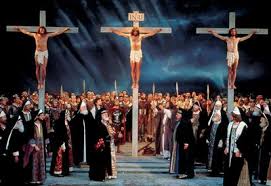
Traditionally a product of the catholic church and passion plays were often shown in the Easter play as a part of lent. They were first performed in Latin in the 13th century becoming more popular through the 15th century when they begun to be performed not only in church but in village squares etc.
The plays consisted of readings of the gospel, the last supper and the tales of Mary Magdalene.
These plays became adapted and reinterpreted from place to place and country where they were performed eg. the introduction of Satan (which became typical of German and Czech plays), and thus of introductory representations of the fall of Lucifer and the Fall of man.
Wednesday, 18 September 2013
Staging notes for a production of Faustus.
Act 1 scene 3 in Dr Faustus marks the arrival of Mephistopheles.
This scenes staging notes may be crucially important from both the point of Faustus and Mephistopheles as it could completely shape the interpretation of the what the character says but also how the audience view the situation. From Faustus's role when the devil enters Faustus states 'Thou art too ugly to attend me' - this could be interoperated in two ways in my opinion, either that Faustus is saying this through arrogance in a mocking tone or that he is actually fearful. In my opinion if he was acting in an arrogant manor this would further emphasise his later point that he believes the devil has been summoned under his command. This could further contrast to the role of Mephistopheles as he could be presenting him self in a mocking manor. For example when he says 'which strike a terror to my fainting soul' this first seems a mockery anyway as devils are not said to even have a soul and also 'terror' implies that he is in some way warning Faustus. But is it a warning or a temptation presentation?
Is Mephistopheles saying this in a means of reverse psychology? by describing hell as so awful if he further tempting Faustus using the mentality that if you tell someone not to do something they will do it.
These staging notes would not only create a sly sense of corruption with the devil which would fit the common conception of a Christian audience's at the time that the devil is evil. This would also both in some ways explain the temptation posed to Faustus by the devil. But also post the blame completely to Faustus as despite this warning whether it be serious or not he still chooses to sell his soul.
This makes Faustus seem either incredibly stupid for giving into an obviously corrupt temptation or would make the audience sympathise that he is merely drawn to do something that is a common human reaction and that this is a tragic downfall of his character. The audience may be inclined to sympathise with his temptation of sin.
Subscribe to:
Posts (Atom)